The Conversation
15 Sep 2025, 05:33 GMT+10
Share article
Print article
There's a chilling line in Australia's new climate adaptation plan:
It is prudent to plan for global warming levels of 2C to 3C by the end of this century, with temperatures in Australia likely to track higher than the global average.
Australia is already adapting to the existing 1.3C of climate change, but as the new National Climate Risk Assessment shows, we will need to adapt to much more change. This includes the warming locked in due to the lag time between emissions and warming, as well as the warming yet to come from future emissions. Climate adaptation is many things, from planting mangroves to slow coastal erosion to rebuilding flood-damaged bridges to tolerate more extreme conditions.
For well over a decade, we and other climate adaptation scientists have called on successive governments to create a national plan to guide Australia's response. It's finally here. Is it up to the task?
The plan does many things right, such as describing which tier of government is responsible and laying out the government's thinking about future programs. But there are gaps. Proposed future actions are not clear nor proportionate to the challenge, while monitoring and tracking won't start for several years. Until we have effective monitoring, we won't know which actions work best - and which don't.
We should think of this plan as a vital starting point. Now the real work begins. Australia is huge and climate change will affect every sector. That means the government must choose carefully where to put their funding and to engage with others so they also contribute to overall action.
Released today, the government's National Adaptation Plan draws on the long-delayed National Climate Risk assessment, which outlines many of the escalating threats climate poses to humans, our activities and the environment. By releasing both together, the government is suggesting adaptation is a key way of responding to these threats.
This is true. But all adaptation has limits. Adaptation must be linked to emission reduction, given slower progress on emission reduction increases the need for climate adaptation. Later this week, the government will release its 2035 emission reduction targets.
The report lays out A$3.6 billion in spending since 2022 on policies which can benefit climate adaptation, and points to a further $9 billion by decade's end. That's not to say these are explicitly climate adaptation policies and initiatives - rather, they can support Australians to "adapt and strengthen their resilience", according to the plan, especially if climate adaptation aspects are integrated. For example, the $1 billion Disaster Ready fund has aspects directly tackling climate adaptation, while the $200 million Urban Rivers and Catchments program greening city rivers has more indirect benefits.
It's widely accepted climate adaptation can have very high returns on investment. For instance, a 2022 Insurance Council of Australia report estimates $1 spent on resilience returns $9.60 by avoiding future financial, health and social damage. Given this return, are we under-investing?
Some adaptations such as early warning systems for disasters, nature-based solutions to slow floodwaters and building climate-smart homes can save many times the initial investment. But others may not be.
The report has a welcome focus on "betterment" - rebuilding bridges, roads or other infrastructure after a disaster to be better adapted for the next one.
On agriculture, Australian farmers have been adapting well to the climate changes to date. But the report indicates existing adaptation options are unlikely to be able to meet the rapid, large-scale changes likely to arrive. We need to invest in the research and development to enable the next generation of agricultural adaptation.
The report focuses on finding ways to direct private finance to climate adaptation measures, such as by including adaptation in Australia's sustainable finance classification system. This is welcome, as much focus to date has gone to climate emission-reduction even as investors increasingly ask how they can invest in adaptation.
It's essential to find out which climate adaptation measures work. There's no point building expensive seawalls if rising seas will rapidly make them ineffective.
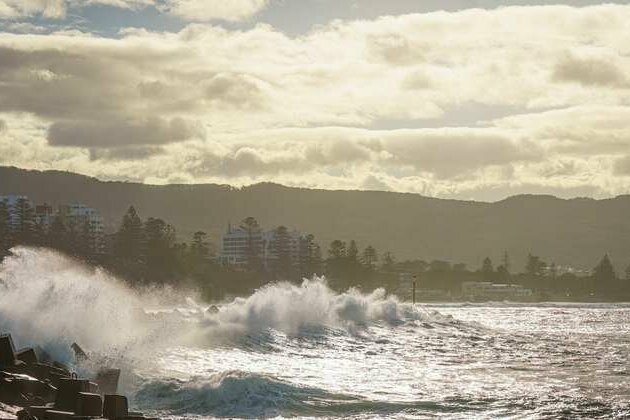
Many coastal councils are already under pressure to act by residents affected by worsening coastal erosion. But what does "act" look like? Who should pay? And at what point should decisions on relocating infrastructure or communities be made - and by whom ?
The plan is quite light on in terms of metrics. Nations such as the United Kingdom and Finland already have climate change laws that include progress measures and five-year updates for climate adaptation built in.
Globally, this is where good practice on climate adaptation is headed, alongside a focus on identifying which actions work best over specific time frames and under different future climates.
We should see the National Adaptation Plan as a critical foundation to build on for a well-adapted and prosperous Australia. Ideally, this plan and the associated National Climate Risk Assessment will kickstart wide interest in adaptation and lead to a prioritisation of actions likely to generate best outcomes as well as clear workplans outlining which tier of government does what.
Effective adaptation will require greater effort in areas such as:
What this report makes clear is that there's no time to lose. Government capabilities must become much stronger to get ahead of escalating climate change, as well as to ensure better integration across sectors and between levels of government.
Get a daily dose of Australian Herald news through our daily email, its complimentary and keeps you fully up to date with world and business news as well.
Publish news of your business, community or sports group, personnel appointments, major event and more by submitting a news release to Australian Herald.
More InformationWASHINGTON, D.C.: The shooting of conservative activist Charlie Kirk at a Utah college event has reignited debate over how social media...
JERUSALEM - The plane carrying Israeli Prime Minister Netanyahu to the U.S. this week will fly a different route, avoiding air space...
WASHINGTON, D.C.: Federal Reserve Governor Lisa Cook described a condominium she bought in June 2021 as a vacation home on a loan estimate...
JOHANNESBURG, South Africa: South Africa's Constitutional Court has struck down an apartheid-era law that prevented men from taking...
ATLANTA/WASHINGTON, D.C.: A plane carrying more than 300 South Korean workers detained during an immigration raid at a Georgia battery...
BRASILIA, Brazil: In a landmark decision, Brazil's Supreme Court has convicted former President Jair Bolsonaro on September 11, 2025,...
NEW YORK CITY, New York: The long-running question of who would control Rupert Murdoch's vast media empire has finally been answered....
SYDNEY, Australia: Australia's ANZ is embarking on one of its deepest restructurings in years, with new CEO Nuno Matos announcing 3,500...
New Chandigarh (Punjab) [India], September 15 (ANI): Australia skipper Alyssa Healy has assured that the calf injury that caused experienced...
by Xinhua writer Ma Yunfei BEIJING, Sept. 15 (Xinhua) -- Walking through the vast grounds of Shougang Park in western Beijing, I...
Share article Print article There's a chilling line in Australia's new climate adaptation plan: It is prudent to plan for global...
Share article Print article Climate shocks threaten to devastate communities, overwhelm emergency services and strain health, housing,...